Iteration Over Perfection: How Indian Agile Teams Are Outpacing American Product Cycles
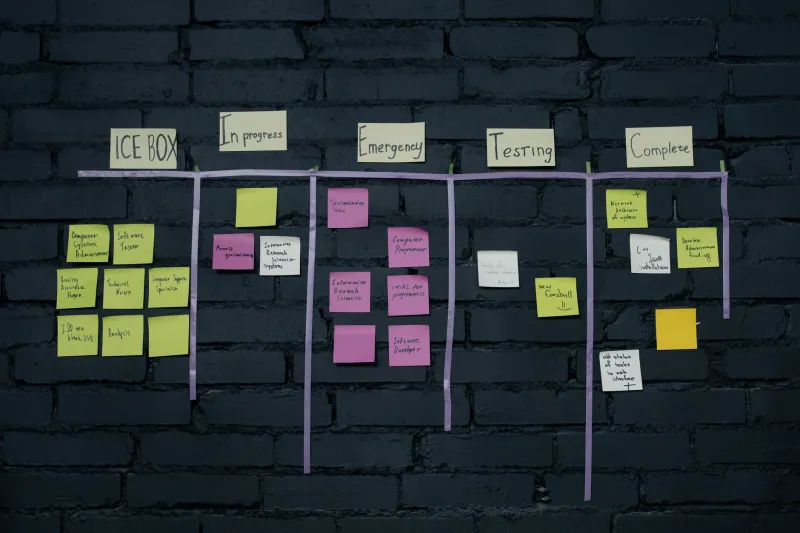
There is a particular kind of organizational pride embedded in American product development culture—a conviction that shipping something means it must first be finished. Roadmaps are exhaustive. QA cycles are layered. Stakeholder sign-offs multiply. And somewhere in the middle of all that rigor, a competitor—often one operating with a leaner philosophy and a different cultural relationship with risk—ships first.
This dynamic is playing out across sectors, from SaaS platforms to consumer applications to enterprise tooling. And increasingly, the teams enabling faster releases for American companies are based in India.
The Cultural Architecture of Delay
To understand why American product teams often move slowly, it helps to examine the values embedded in their process. US corporate culture has historically rewarded completeness. Investors, boards, and internal stakeholders tend to respond well to polished presentations, fully scoped features, and launch-ready products. The instinct to avoid public failure—or even visible imperfection—runs deep.
This is not without merit. Precision matters. But in markets where consumer preferences shift quarterly and competitive landscapes can be redrawn by a single well-funded entrant, the cost of waiting for perfect is no longer theoretical. It is measurable in lost market share, delayed revenue, and diminished first-mover positioning.
Indian development culture, shaped by decades of delivering technology solutions under tight constraints and compressed timelines, has cultivated a different instinct: ship what works, measure what happens, and improve relentlessly. This is not a compromise of quality—it is a redefinition of what quality means in a dynamic environment.
What Indian Agile Practitioners Actually Do Differently
The distinction is not simply philosophical. It manifests in concrete workflow decisions that compound over product cycles.
Indian agile teams working with US enterprises frequently introduce what practitioners describe as a "thin-slice" release model. Rather than building toward a comprehensive feature set before launch, development is organized around the smallest viable expression of core value. A product does not need every planned capability to validate whether its central premise resonates with users. It needs enough to generate signal.
This approach demands a tolerance for ambiguity that many American product organizations must deliberately cultivate. Internal stakeholders accustomed to seeing finished work before it reaches users often require coaching on how to interpret early-stage metrics—and why a 70% solution shipped in six weeks may outperform a 95% solution shipped in six months.
Indian practitioners also tend to treat retrospectives as operational tools rather than ceremonial exercises. Sprint reviews are not formalities; they are decision points. Priorities shift based on data, not on the original plan's momentum. This fluidity can feel disorienting to American teams trained to defend their roadmaps, but it produces products that are continuously calibrated to actual user behavior.
The MVP Reframe: Minimum Viable Is Not Minimum Effort
One of the most persistent misconceptions American enterprises hold about minimum viable products is that they represent a shortcut—a way to ship something cheap before the real work begins. Indian agile teams tend to reject this framing entirely.
A well-constructed MVP, as practiced by experienced Indian development teams, is a precision instrument. It isolates the highest-risk assumption in a product concept and tests it at the lowest possible cost. The goal is not to minimize effort but to maximize learning per dollar spent.
This distinction matters enormously for American companies operating in competitive markets. An MVP built with discipline—one that genuinely tests whether users will pay for a core capability before surrounding it with ancillary features—can compress the feedback loop from eighteen months to ninety days. The companies that have internalized this approach are not shipping inferior products. They are shipping smarter ones.
Enterprise Adoption: Where the Shift Is Happening
The adoption of Indian agile philosophies is not confined to startups or digital natives. Established American enterprises across financial services, healthcare technology, and retail are restructuring their development organizations around these principles—often with direct guidance from Indian consulting and engineering partners.
Several patterns are emerging in these engagements. First, Indian practitioners are frequently brought in not merely to build software but to reconfigure the product development culture around it. This includes retraining product managers to write leaner specifications, coaching executives on how to evaluate early-stage metrics, and establishing release rhythms that prioritize frequency over fanfare.
Second, the integration of Indian and American team members tends to accelerate adoption. When US-based product managers work directly alongside Indian engineers who operate with iteration-first instincts, the cultural transfer happens organically. The practices become visible, discussable, and ultimately adoptable.
Third, the results are generating internal advocacy. Teams that have completed one product cycle under this model rarely want to return to the previous approach. The experience of seeing user feedback incorporated within a single sprint—rather than queued for the next major release—changes how people think about the relationship between development and the market.
Risk Tolerance as a Competitive Asset
Underlying all of this is a question of risk tolerance—specifically, the willingness to let users encounter a product before it is complete. American organizations often frame this as a reputational risk. Indian practitioners tend to frame the inverse as a competitive risk: the risk of building something nobody wants because you never asked.
This is not a criticism of American rigor. It is an observation about where that rigor is most productively applied. Precision in engineering matters. Precision in user research matters. But precision in planning—the conviction that a roadmap built today can accurately anticipate what users will need twelve months from now—is a form of confidence that the market rarely rewards.
The enterprises that are winning in fast-moving categories are those that have learned to apply their standards selectively: rigorous where it protects users, flexible where it would only protect the plan.
A New Model for American Product Development
The partnership between American product vision and Indian agile execution is producing a model that neither culture would likely have developed independently. American enterprises bring market insight, capital discipline, and a deep understanding of domestic consumer expectations. Indian practitioners bring process fluency, iteration instinct, and a demonstrated capacity to deliver working software under conditions that would paralyze more convention-bound teams.
For US companies competing in markets where speed is no longer a differentiator but a baseline requirement, this partnership is not an operational convenience. It is a strategic necessity.
The question is no longer whether American enterprises can afford to adopt iteration-first development philosophies. The evidence is accumulating that they cannot afford to ignore them.